Knock Knee: The Ultimate 360° Guide for Causes, Symptoms, Diagnosis, and Treatment.
Knock knees, medically known as knock knees or genu valgum, are a common orthopedic concern in India. If your knees touch each other while your ankles remain apart, you may have this condition. Many parents worry about knock knees in children, while adults often search for solutions for knock knees in adults due to pain or cosmetic concerns.
This detailed guide explains everything about knock knee treatment, causes, diagnosis, and advanced solutions offered by Dr. Saksham Mittal, a leading Joints Specialist Doctor in Delhi.
Understanding Knock Knee
What is Knock Knee?
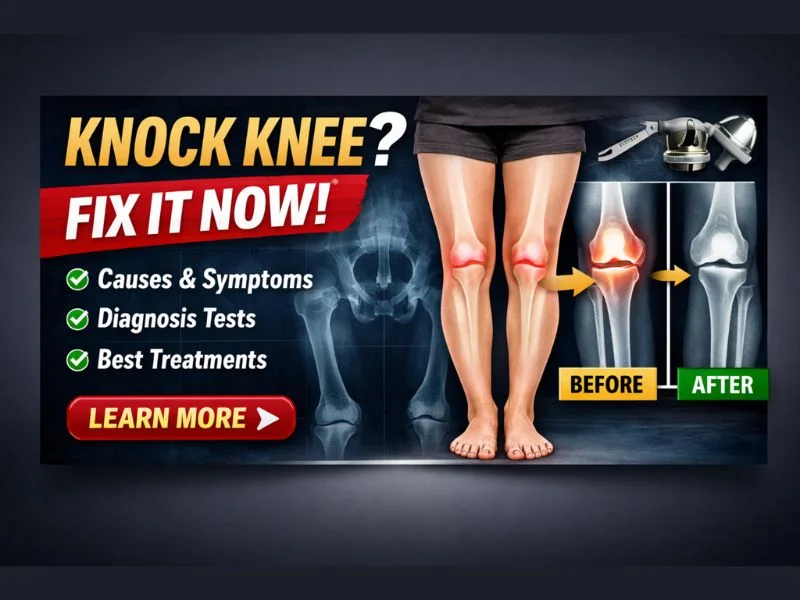
A knock knee condition occurs when the legs angle inward at the knees. When standing straight, the knees touch, but the ankles stay separated.
It is medically referred to as genu valgum, and in mild cases, it is part of normal growth in knock knees in children between the ages of 2 and 5 years.
What Do You Mean by Knock Knee Problem?
The knock knee problem becomes concerning when:
- The angle is severe
- It persists beyond childhood.
- It causes pain or walking difficulty.
- It leads to joint damage in adults.
Left untreated, it may increase joint wear and tear, sometimes leading to total knee replacement surgery for severe knee deformity in advanced cases.
What is Knock Knee Syndrome?
Some people refer to persistent genu valgum with pain and instability as knock knee syndrome. It may be associated with:
- Weak hip muscles
- Ligament imbalance
- Arthritis in knock knees in adults
Knock Knee Causes – Why Does It Happen?
Understanding the causes of knock knees helps in choosing the right knock knee treatment.
A. Genetic & Growth-Related Causes (Children)
In knock knees in children, common causes include:
- Normal Growth Pattern: Many children naturally develop a mild knock-kneed posture between 2 and 5 years.
- Vitamin D Deficiency and Knock Knees: Rickets due to nutritional deficiency weakens bones.
- Genetic Factors: Family history of genu valgum.
- Bone Disorders: Conditions like Blount’s disease.
- Malnutrition: Poor calcium intake.
Early consultation with an Orthopedic doctor in Janakpuri ensures proper monitoring.
B. Nutritional & Health-Related Causes (Adults)
In knock knees in adults, causes differ:
- Arthritis: Cartilage degeneration alters alignment.
- Previous Injury: Fractures around the knee.
- Impact of obesity on knee joint health: Excess body weight increases medial stress.
- Untreated childhood deformity progressing into adulthood.
An experienced Orthopedic doctor in Dwarka can evaluate alignment changes early to prevent complications.
Knock Knee Symptoms – When Should You Be Concerned?
Common knock knee symptoms include:
- Knees touching while standing
- Wide gap between ankles
- Knee pain after walking
- Limping gait
- Frequent tripping
- Early joint fatigue
In severe knock knees in adults, symptoms may include:
- Swelling
- Difficulty climbing stairs
- Uneven shoe wear
Persistent symptoms require professional evaluation by Dr. Saksham Mittal.
How to Check Knock Knee – Diagnosis & Knock Knee Test
Physical Examination
The knock knee test typically includes:
- Checking knee alignment while standing
- Observing walking posture
- Measuring ankle gap
- Assessing joint flexibility
- Leg length measurement
Doctors may also check for associated ligament laxity.
Imaging & Lab Tests
For confirmed diagnosis of genu valgum, investigations may include:
- X-rays to assess bone alignment
- MRI for cartilage damage
- Blood tests for vitamin D deficiency and knock knees
- Calcium level evaluation
Accurate diagnosis ensures personalised knock-knee treatment.
Knock Knee Treatment – How to Fix Knock Knee?
Choosing the right knock-knee treatment depends on age, severity, and symptoms.
A. Non-Surgical Treatment
Mild cases often respond well to conservative care:
- Observation of growing children
- Knock-knee exercises
- Physiotherapy
- Nutritional correction
- Braces or orthotics
- Use of a knuckle pillow during sleep for mild alignment support
Many patients benefit from nonsurgical treatment options for knee pain, especially in early-stage deformity.
Simple Knock Knee Exercises
| Exercise | How to Perform | Repetitions | Benefit |
| Side-Lying Leg Raises | Lift upper leg, hold 2–3 sec | 10–15 per leg | Strengthens hip abductors |
| Wall Squat with Ball | Ball between knees, squat & squeeze | 10 reps | Improves alignment control |
| Clamshell | Lift the upper knee while the feet are together | 10 per leg | Stabilises pelvis |
These knee exercises strengthen muscles and improve joint mechanics.
B. Surgical Treatment
When conservative care fails, advanced knock-knee surgery may be required.
Options include:
- Corrective Osteotomy: Realigns bones
- Guided growth surgery (children)
- Joint replacement in severe arthritis
- Advanced deformity correction procedures
In adults with arthritis, knock knee surgery can prevent progression to total knee replacement surgery for severe knee deformity.
Patients often ask about knock knee surgery. The cost varies depending on:
- Type of procedure
- Hospital facilities
- Implant requirements
- Post-operative rehabilitation
Consulting Dr. Saksham Mittal helps understand realistic expectations about the knock knee surgery cost and recovery timelines.
Impact of Knock Knee – Why Early Treatment Matters
An untreated knock knee may cause:
- Increased medial knee pressure
- Early arthritis in knock knees in adults
- Growth disturbance in children
- Reduced athletic performance
- Chronic pain
In India, delayed care often leads to complex deformities. Early knock knee treatment prevents long-term joint damage.
Lifestyle Management & Prevention
Managing genu valgum involves:
- Maintaining a healthy weight
- Correct posture
- Regular physiotherapy
- A balanced diet rich in calcium
- Addressing vitamin D deficiency and knock knees early
Avoid prolonged strain activities if experiencing knock knee symptoms.
Using supportive footwear and a knee pillow may assist mild cases.
When Should You Consult a Specialist?
Early consultation can prevent long-term complications and reduce the need for aggressive interventions later. You should consider visiting a specialist if you notice:
- Persistent inward angling of the knees after age 7 in children
- Progressive deformity in teenagers
- Knee pain, especially on the inner side of the joint
- Difficulty in running, climbing stairs, or prolonged walking
- Uneven leg appearanceaffectsg confidence
- One knee appears more affected than the other.
- Recurrent falls in children
For knock knees in adults, warning signs include joint stiffness, swelling, and early signs of arthritis. Ignoring these symptoms can worsen alignment and joint degeneration over time.
If you are unsure whether your condition requires intervention, a detailed clinical evaluation by Dr. Saksham Mittal can help determine whether observation, physiotherapy, or structured knock-knee treatment is appropriate.
Patients searching for a reliable Joint Specialist Doctor in Delhi often require a comprehensive approach—clinical examination, radiological assessment, and customised planning. Whether you consult an Orthopedic doctor in Janakpuri or an Orthopedic doctor in Dwarka, timely care significantly improves outcomes.
Advanced Treatment Approach at Our Centre
At our centre, Dr. Saksham Mittal follows a structured 360° protocol for managing genu valgum, tailored separately for knock knees in children and knock knees in adults.
Step 1: Detailed Assessment
- Clinical alignment measurement
- Advanced imaging is required.
- Nutritional evaluation for vitamin D deficiency and knock knees
Step 2: Personalised Treatment Planning
Depending on severity:
- Mild cases → Structured physiotherapy and knock knee exercises
- Moderate deformity → Bracing or guided growth monitoring
- Severe cases → Advanced knock knee surgery
Step 3: Post-Treatment Rehabilitation
Recovery doesn’t end after surgery or therapy. Strength-building, gait correction, and muscle balancing are critical to prevent recurrence.
Patients frequently inquire about knock knee surgery, and transparency is key. The cost depends on:
- Surgical complexity
- Implant selection
- Hospital stay duration
- Rehabilitation needs
During consultation, Dr. Saksham Mittal provides a clear roadmap so families can make informed decisions about knock knee treatment options.
Realistic Expectations – Children vs Adults
Understanding age-specific outcomes is essential.
For Knock Knees in Children:
- Many mild cases resolve naturally
- Early detection of vitamin D deficiency and knock knees prevents progression.
- Guided growth surgery has excellent correction rates when done timely manner.
For Knock Knees in Adults:
- Alignment correction may relieve pain
- Early intervention may delay arthritis.
- Severe deformity might require osteotomy or joint preservation procedures.
If arthritis is advanced, corrective alignment procedures may prevent worsening damage before joint replacement becomes necessary.
Common Myths About Knock Knee
Let’s clear some misconceptions:
- ❌ Myth: All knock knees need surgery.
✅ Fact: Most mild cases respond to conservative knock knee treatment. - ❌ Myth: It’s only a cosmetic issue.
✅ Fact: Untreated deformity can lead to joint damage. - ❌ Myth: Exercise alone can fix severe deformity.
✅ Fact: Severe structural issues may require knock knee surgery. - ❌ Myth: Adults cannot improve alignment.
✅ Fact: With proper guidance from Dr. Saksham Mittal, many adults achieve pain relief and functional improvement.
Long-Term Knee Health Strategy
Managing knock-kneed requires long-term care planning:
- Maintain optimal body weight
- Follow the prescribed knee exercises regularly.
- Ensure adequate sunlight exposure for vitamin D
- Monitor alignment changes annually.
- Seek early help for new knee symptoms.
Balanced nutrition, strengthening exercises, and professional monitoring create sustainable improvement.
Why Choose Dr. Saksham Mittal for Knock Knee Treatment?
When selecting a specialist, experience matters. Dr. Saksham Mittal combines:
- Advanced deformity correction expertise
- Joint preservation techniques
- Precision-based surgical planning
- Comprehensive rehabilitation support
Patients looking for a trusted Joints Specialist Doctor in Delhi benefit from a patient-centric approach that prioritises safety, function, and long-term mobility.
Whether you are consulting an Orthopedic doctor in Janakpuri or seeking an Orthopedic doctor in Dwarka, expert evaluation ensures clarity and confidence in your treatment journey.
Final Thoughts: Take the First Step Toward Better Alignment
Knock knee, or genu valgum, is more than just a cosmetic concern. It can affect mobility, joint health, and long-term quality of life. The key lies in early detection, accurate diagnosis, and personalised knock knee treatment.
From identifying knock knee causes to addressing knock knee symptoms, every step matters. Whether your child shows signs of inward angling or you are an adult struggling with pain, timely action prevents complications.
If you are worried about alignment, discomfort, or progression of deformity, schedule a consultation with Dr. Saksham Mittal today.
Contact us now or visit our Google Business Profile to book an appointment.
Strong knees support a strong life—let’s protect yours with expert care.
Knock Knee FAQs – Causes, Symptoms, Treatment & Surgery Explained
Knock knee, medically called genu valgum, is a condition where knees touch while standing straight but ankles remain apart.
Knock knees in children are usually due to normal growth, vitamin D deficiency, genetic factors, or bone disorders like Blount’s disease.
Knock knees in adults may develop due to arthritis, previous injury, obesity, or untreated childhood genu valgum.
Mild knock knees between ages 2 and 5 are normal and often correct naturally without treatment.
Consult a specialist if knock knees persist after age 7, worsen over time, or cause pain or walking difficulty.
Yes, knock knees in adults can cause inner knee pain, swelling, stiffness, and early arthritis.
Knock knee is diagnosed through physical examination, alignment measurement, X-rays, and vitamin D level testing.
Yes, vitamin D deficiency can weaken bones and lead to knock knees, especially in children.
The best knock knee treatment depends on age and severity, including exercises, physiotherapy, bracing, or surgery.
Yes, mild knock knees can improve with physiotherapy, exercises, nutritional correction, and weight management.
Side-lying leg raises, clamshells, and wall squats with a ball help strengthen hip muscles and improve alignment.
Yes, excess body weight increases knee stress and can worsen knock knees in adults.
Knock knee surgery is safe when performed by an experienced Joint Specialist Doctor in Delhi like Dr. Saksham Mittal.
Knock knee surgery includes corrective osteotomy or guided growth procedures to realign leg bones.
Knock knee surgery cost depends on procedure type, hospital facilities, implants, and rehabilitation requirements.
Yes, untreated knock knees can increase joint wear and lead to arthritis in adults.
Stand straight with legs together; if knees touch but ankles remain apart, you may have knock knees.
Yes, adults can improve knock knee alignment with proper treatment, including physiotherapy or surgery.
You should consult a Joint Specialist Doctor in Delhi like Dr. Saksham Mittal for expert knock knee treatment.
Yes, early knock knee treatment prevents joint damage, arthritis, and the need for complex surgery later.