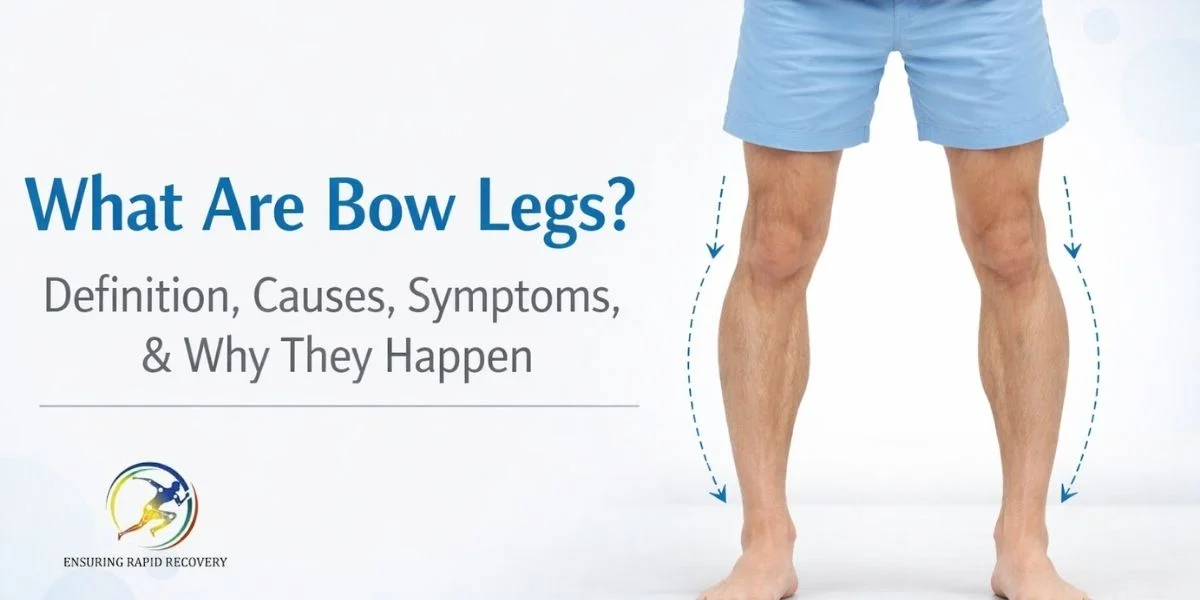
If you’ve ever noticed legs that curve outward like a bow, you’ve already seen what people call bow legs. In medical terms, doctors refer to this condition as genu varum, a lower-limb deformity in which the legs bend outward while the knees stay apart even when the ankles touch.
Before we go deeper, let’s connect this topic with expert care. Many patients start their journey by consulting the best orthopedic surgeon in Delhi, especially when they want clarity about diagnosis, treatment, or second opinions. Specialists like Dr. Saksham Mittal help patients understand whether their condition needs treatment or just observation.
Now let’s break this down in a simple, human way, no medical jargon overload, just clear understanding.
What Are Bow Legs? (Definition Explained Simply)
Bow legs, what is bow legs, what are bow legs? These questions often come from confusion or concern.
Bow legs describe a condition where:
- The legs curve outward
- The knees do not touch when standing
- The ankles stay close together
Doctors call this condition genu varum, which describes the inward alignment of the shin bone (tibia) relative to the thigh bone (femur). This creates a visible leg curvature.
In simple words, your legs form a “parenthesis shape” instead of a straight line.
Interestingly, mild bowing appears in many toddlers. In many cases, it corrects naturally as children grow. But in adults, the situation may need evaluation, especially when pain or imbalance appears.
Bow Legs Is Also Known As (Medical Terms You Should Know)
People often ask: bow legs is also known as what?
Here are the common names:
- Genu varum (medical term)
- Varus deformity
- Bowed legs
- Lower limb deformity (general term)
- Skeletal alignment disorder (broader classification)
These terms all describe the same alignment issue, but from different medical angles.
Also Read: Outdoor vs Indoor Exercise for Arthritis Patients During Delhi Summer
Normal Legs vs Bow Legs (Easy Comparison)
Understanding normal legs vs bow legs helps identify the condition early.
Normal Leg Alignment:
- Knees touch when standing
- Legs form a straight vertical line
- Weight distributes evenly
Bow Legs (Genu Varum):
- Knees stay apart
- Legs curve outward
- Pressure shifts to the outer knee joint
Think of it like a straight road vs a slightly bent bridge. One carries the load evenly, the other doesn’t.
Doctors often check alignment using physical examination and imaging if needed.
What Causes Bow Legs in Adults?
Now, let’s address one of the most searched questions: what causes bow legs in adults
Adult bow legs usually develop due to long-term stress or underlying bone conditions. Common causes include:
1. Vitamin and Nutritional Deficiency
A lack of vitamin D or calcium deficiency can weaken bones. Weak bones may slowly change alignment.
2. Arthritis and Joint Wear
Knee joint wear can push bones into a curved position over time.
3. Old Injuries
Improper healing after fractures can affect alignment.
4. Bone Structure Changes
Some people develop bone development disorder patterns that become visible later in life.
In such cases, consulting the best orthopedic surgeon in Delhi helps identify whether conservative treatment or advanced care is needed.
Know More: How to Correct Bow Legs in Adults: Treatment Options and Exercises
What Causes Bow Legs in Old Age?
Many people ask: What causes bow legs in old age
In older adults, bow legs often develop due to:
- Long-term cartilage wear
- Knee osteoarthritis
- Gradual joint misalignment
- Age-related weakening of bones
As cartilage wears down, the knee joint loses balance. Over time, pressure shifts outward, creating a curved leg appearance.
This is why elderly patients often visit specialists such as the Best knee replacement surgeon in Delhi or a joint specialist for evaluation.
Rickets and Bow Legs Connection
Rickets bowed legs are a well-known medical link.
Rickets is a childhood condition caused mainly by vitamin D deficiency. It weakens growing bones, leading to deformities like bow legs.
According to general medical consensus (including public health sources like WHO guidelines on vitamin D and bone health), proper nutrition plays a key role in preventing skeletal deformities during growth years.
When rickets affects children:
- Bones soften
- Legs bend under body weight
- Growth plates get affected
Early diagnosis helps prevent long-term deformity.
Bow Legs in Adults vs Children
Understanding age difference matters:
In Children:
- Often physiological (normal growth phase)
- May correct naturally
- Needs monitoring, not panic
In Adults:
- Usually structural
- Often linked to arthritis or past injury
- May require treatment or physiotherapy
This is why doctors evaluate both age and severity before suggesting treatment.
Symptoms of Bow Legs
Common signs include:
- Visible leg curvature
- Knees not touching while standing
- Uneven walking pattern
- Knee or ankle discomfort
- Difficulty in long walks
Some people only notice it in photos, especially when they search for bow legs images to compare.
Can Bow Legs Be Corrected?
Yes, but bow leg treatment depends on severity.
Doctors may suggest:
- Physiotherapy exercises
- Lifestyle correction
- Bracing in some cases
- Surgical correction for severe deformity
Many patients first explore non-surgical options before considering advanced procedures.
This is where guidance from the best orthopedic surgeon in Delhi becomes important again, especially for personalized treatment planning.
Bow Legs Exercises and Natural Correction
Exercises may help in mild cases. They focus on:
- Strengthening thigh muscles
- Improving alignment
- Reducing joint pressure
However, exercises cannot fully correct severe structural deformities. They mainly support mobility and pain reduction.
Always consult a specialist before starting any exercise plan.
Medical Terms You Should Remember
To understand reports or doctor discussions, keep these terms in mind:
- bowed legs
- genu varum
- varus deformity
- skeletal alignment disorder
- lower limb deformity
- leg curvature
- bone development disorder
These help you decode medical advice easily.
When Should You See a Doctor?
You should consult a specialist if:
- Pain increases in the knees
- Walking becomes uneven
- Curvature worsens over time
- Daily activity gets affected
The best orthopedic surgeon in Delhi can evaluate whether your case needs monitoring or treatment. Clinics like those associated with Dr. Saksham Mittal often help patients understand alignment issues in detail.
Conclusion: Understanding Bow Legs and What You Should Know
Bow legs might appear straightforward on the surface, but the disorder has several causes, such as childhood nutrition problems and wear and tear of the joints in adulthood. Knowing how legs work answers your questions about making early decisions better.
Do not panic if you notice the symptoms. In the majority of cases, this disease can be treated through effective diagnosis, lifestyle change, or medication.
Not knowing what to do or just to be well examined, it is always better to address a trained specialist. You may get in touch with us to get advice and make appointments, or you may call us to have a direct talk with our team about the next steps.