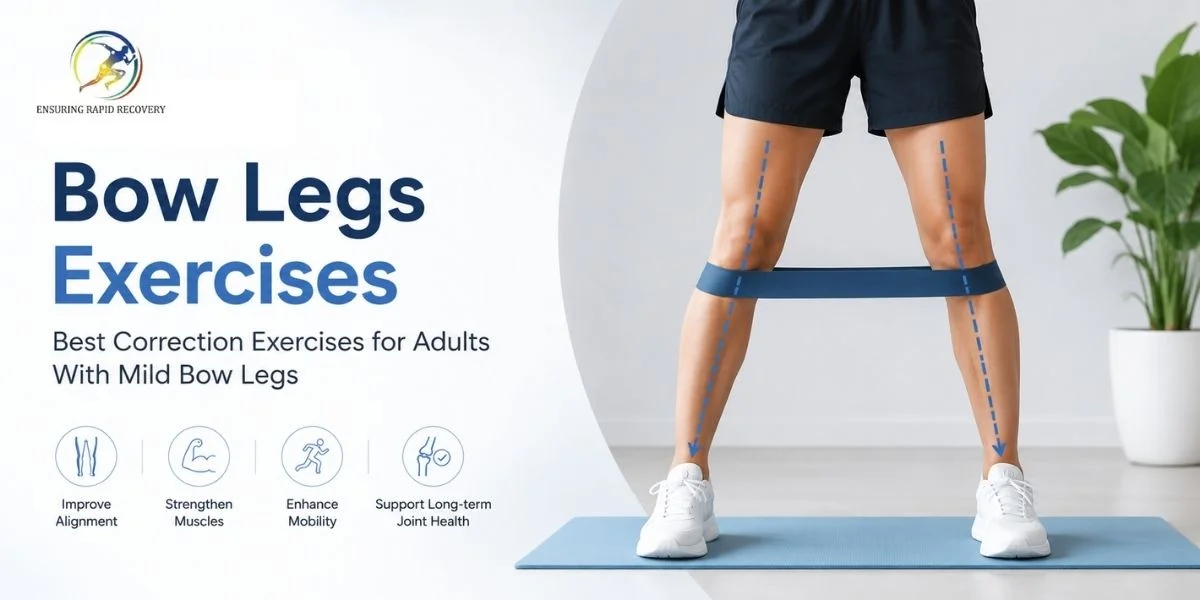
Living with mild bow legs can affect more than posture. It may change the way you walk, place uneven pressure on the Knee Joint, and create discomfort during daily movement. The right bow legs exercise routine can help improve flexibility, muscle balance, and lower body control while supporting better alignment over time.
Many adults search for an effective exercise for bow legs because they want non-surgical ways to improve posture and movement naturally. While severe structural conditions may require medical intervention, mild bow legs often respond well to targeted strengthening, mobility work, and corrective movement patterns.
At advanced orthopedic and rehabilitation centers, specialists focus on improving Lower Limb Alignment through evidence-based Physiotherapy, Functional Movement training, and personalized exercise planning. In such clinical settings, experienced professionals often recommend customized rehabilitation programs because every patient presents different movement limitations, posture habits, and muscle imbalances. Dr. Saksham Mittal also emphasizes individualized treatment approaches to ensure safe, effective, and long-term recovery outcomes.
Also Read: What Are Bow Legs? Definition, Causes, Symptoms, and Why They Happen
Understanding Mild Bow Legs in Adults
Mild bow legs, medically known as Genu Varum, occur when the knees stay apart even while the feet and ankles remain close together. In adults, this condition may develop because of poor posture, Muscle Imbalance, old injuries, uneven weight distribution, or structural variations in the Femur and Tibia.
Unlike severe deformities, mild bow legs usually focus more on movement correction, Joint Stability, and muscular support rather than surgical treatment.
People with mild bow legs may notice:
- Uneven walking pattern
- Pressure on the inner Knee Joint
- Tight Calf Muscles
- Reduced flexibility
- Poor lower body posture
- Knee discomfort during activity
- Fatigue after prolonged standing
A structured bow-legs correction exercise program can help improve mobility, coordination, and lower-body mechanics.
Can Bow Legs Be Corrected With Exercise?
One of the most common concerns patients have is: Can bow legs be corrected with exercise?
Exercise cannot completely reshape mature bones in adults. However, it can improve posture, muscular support, gait mechanics, and movement efficiency. In mild cases, targeted exercises may reduce visible imbalance while improving comfort and functional movement.
The goal of corrective training is not simply appearance. A proper rehabilitation plan aims to:
- Improve Knee Alignment
- Strengthen weak muscle groups
- Enhance Joint Mobility
- Support better walking mechanics
- Reduce stress on joints
- Improve lower body conditioning
- Correct movement compensation patterns
This approach supports long-term Musculoskeletal Health and functional mobility.
Also Read: How to Correct Bow Legs in Adults: Treatment Options, Exercises, and Medical Solutions
Benefits of Bow Legs Exercises
A professionally guided bow legs workout offers physical and functional benefits beyond posture correction.
Better Lower Body Stability: Exercises strengthen the Glute Muscles, Quadriceps, Hamstrings, and Hip Abductors, which support Joint Stability and movement control.
Improved Walking Mechanics: Corrective Exercise programs often improve walking posture and reduce uneven pressure distribution through gait improvement therapy.
Enhanced Flexibility and Mobility: Joint flexibility training and Stretching Exercise routines improve movement range and reduce stiffness.
Reduced Muscle Imbalance: Many adults with mild bow legs develop compensation patterns that affect balance and alignment. Strength Training and mobility work help restore muscular balance.
Improved Confidence During Movement: Better posture and movement control often improve confidence during walking, exercise, and daily activities.
Best Bow Legs Exercises for Adults
Choosing the right exercise for bow legs matters more than performing random workouts. The following exercises commonly appear in Physical Therapy and Sports Medicine rehabilitation programs.
1. Resistance Band Side Walks
Resistance Band Training activates the Glute Muscles and improves hip stability.
How It Helps
- Supports lower body strengthening
- Improves leg posture improvement
- Enhances knee positioning therapy
- Reduces inward knee collapse during movement
How to Perform
- Place a resistance band above the knees
- Slightly bend the knees
- Step sideways slowly while maintaining tension
Repeat for 10–15 controlled steps on each side.
2. Wall Squats With Proper Alignment
This exercise improves Knee Alignment and lower body conditioning.
Benefits
- Strengthens Quadriceps
- Supports lower extremity rehabilitation
- Improves body mechanics
- Enhances balance training
Keep the knees aligned with the feet during movement.
3. Inner Thigh Activation Exercise
Weak inner thigh muscles often contribute to poor lower limb control.
Simple Method
- Sit comfortably
- Place a pillow or soft ball between the knees
- Squeeze gently and hold for several seconds
This movement supports muscular balance training and alignment improvement exercises.
4. Hip Bridge Exercise
Hip bridges strengthen the posterior chain and improve pelvic stability.
Targeted Areas
- Glute Muscles
- Hamstrings
- Hip Joint stabilizers
- Lower back support muscles
This exercise also improves corrective leg movement and functional mobility training.
5. Calf and Hamstring Stretching
Tight Calf Muscles and Hamstrings can affect Skeletal Alignment and walking posture.
Stretching Benefits
- Improves Joint Mobility
- Supports flexibility training
- Enhances movement correction therapy
- Reduces lower body tension
Regular bow leg stretching exercises improve overall mobility enhancement routines.
6. Step-Up Training
Step-ups improve balance, coordination, and lower body strength.
Why It Works
This movement supports:
- Leg muscle activation
- Functional movement
- Joint support therapy
- Balance training
- Mobility Exercise progression
Controlled movement is more important than speed.
How to Correct Bow Legs in Adults Exercise Programs
People searching for how to correct bow legs in adults exercise plans often expect fast changes. In reality, correction takes consistency and proper progression.
A successful program usually combines:
- Leg strengthening exercises
- Stretching Exercise sessions
- Alignment Therapy
- Hip stabilization exercises
- Functional mobility training
- Posture rehabilitation exercises
- Mobility enhancement routines
Consistency over several months often produces better results than aggressive short-term training.
Bow Legs Treatment Without Surgery
Many adults prefer bow legs treatment without surgery, especially when symptoms remain mild.
Non-surgical treatment options may include:
- Physiotherapy Programs: Physiotherapy improves posture, flexibility, and muscular coordination using personalized rehabilitation exercises.
- Gait Analysis: Specialists evaluate walking mechanics and identify movement compensation patterns.
- Posture Correction Training: Posture Correction exercises improve body mechanics and reduce uneven stress on the joints.
- Sports Medicine Rehabilitation: Sports Medicine specialists focus on movement efficiency, stability, and mobility restoration.
Patients exploring Orthopedic Medical Tourism in India often seek advanced rehabilitation programs because they combine modern diagnostics with cost-effective orthopedic care.
Importance of Professional Guidance
Although online workouts can be helpful for basic strength and mobility, a professional evaluation ensures greater safety and better long-term results. An orthopedic specialist carefully assesses key factors such as Knee Joint positioning, Hip Joint stability, Joint Mobility, Lower Limb Alignment, Body Mechanics, Skeletal Alignment, and overall movement efficiency to understand the root cause of the problem. If symptoms persist or pain continues despite exercise, consulting the Best orthopedic surgeon in Delhi can help determine whether rehabilitation alone is enough or if more advanced orthopedic care is required. Experienced specialists like Dr. Saksham Mittal often design personalized treatment plans that focus on realistic correction goals, improved function, and long-term mobility enhancement.
Common Exercise Mistakes to Avoid
Incorrect training may increase stress on the joints instead of improving alignment.
Avoid These Common Errors
- Poor squat technique
- Ignoring flexibility work
- Using excessive resistance too early
- Training without warm-up routines
- Neglecting hip strength
- Performing exercises too quickly
Slow, controlled movement usually produces better posture correction and joint support.
Daily Habits That Support Better Alignment
Exercise alone may not fully resolve posture-related issues, as daily lifestyle habits also play an important role in maintaining proper lower body alignment. Simple yet effective practices such as maintaining a healthy body weight, wearing supportive footwear, avoiding prolonged sitting, improving walking posture, staying physically active, and regularly practicing mobility drills can make a significant difference. When followed consistently, these habits support long-term Joint Stability and overall Musculoskeletal Health, helping you maintain better movement, balance, and comfort in everyday life.
When Should You Consult an Orthopedic Specialist?
You should consult an orthopedic specialist if you notice persistent knee pain, difficulty walking, progressive worsening of bow legs, joint stiffness, hip discomfort, reduced balance, or an uneven gait pattern. These symptoms may indicate underlying alignment or joint issues that need professional evaluation. Early assessment by an Orthopedics expert can help identify the root cause and prevent long-term joint stress, mobility limitations, and further complications in lower limb function.
Final Takeaway: Improving Bow Legs Through Consistent Exercise & Guided Care
A structured bow leg exercise program can help adults with mild bow legs improve posture, strengthen supporting muscles, and enhance movement control naturally. While exercise cannot completely reshape adult bone structure, it can improve flexibility, stability, and overall lower-body function.
Whether you are researching bow leg correction exercise routines or exploring whether bow legs be corrected with exercise, the key lies in consistency, proper technique, and professional guidance when needed.
At our orthopedic rehabilitation center, Dr. Saksham Mittal focuses on evidence-based treatment strategies that support posture correction, mobility improvement, and long-term joint health without unnecessary procedures.
If you are experiencing discomfort, walking imbalance, or mobility concerns related to mild bow legs, don’t ignore the signs. Early guidance can make a meaningful difference in your recovery and daily comfort. Book a consultation today with our orthopedic team to get a personalized exercise and rehabilitation plan designed to improve alignment, strengthen your lower body, and help you move with confidence again.
Frequently Asked Questions
Exercise cannot completely reshape adult bones, but mild bow legs can often improve with targeted strengthening, stretching, and posture correction exercises. A structured rehabilitation program may help improve knee alignment, walking posture, balance, and overall movement control.
Some of the most effective bow legs exercises include resistance band side walks, wall squats, hip bridge exercises, inner thigh activation drills, calf stretches, and step-up training. These exercises help strengthen supporting muscles and improve lower limb alignment.
Results vary depending on the severity of the condition, exercise consistency, posture habits, and muscle strength. Many people begin noticing improvements in flexibility, stability, and walking mechanics within a few weeks to a few months of regular training.
Yes, many adults with mild bow legs manage their condition without surgery through physiotherapy, corrective exercise programs, posture training, and mobility exercises. Severe structural deformities, however, may require orthopedic evaluation and advanced treatment.
Yes, bow legs can place uneven pressure on the knee joints, especially on the inner side of the knees. Over time, this may contribute to knee pain, joint stress, walking discomfort, and early wear of joint cartilage.
Bow legs correction exercises usually focus on strengthening the glute muscles, quadriceps, hamstrings, hip abductors, and core muscles. Improving muscle balance helps support better posture and joint stability.
Walking is generally beneficial for overall joint mobility and lower body conditioning, but proper walking posture is important. In some cases, incorrect gait patterns may increase joint stress, so professional guidance may help improve walking mechanics.
You should consult an orthopedic specialist if you experience persistent knee pain, worsening leg alignment, difficulty walking, joint stiffness, balance problems, or reduced mobility despite regular exercise and physiotherapy.
Yes, mild bow legs can occur in adults due to genetics, posture issues, old injuries, muscle imbalance, arthritis, or natural skeletal alignment variations. Some people may notice symptoms only later in life when joint stress increases.