The ACL return-to-sport timeline is one of the most-searched topics among athletes and active individuals after a knee injury. Right at the start, many patients also look for the best doctor for ACL surgery in Delhi, especially when they want clarity about recovery expectations and safe return to activity.
ACL recovery doesn’t work like flipping a switch. It follows biological healing, structured rehab, and gradual loading. Dr. Saksham Mittal, widely recognized as the best orthopedic surgeon in Delhi, often emphasizes that every athlete heals differently, even if the surgery technique stays the same.
Modern Anterior Cruciate Ligament Reconstruction recovery focuses on protection first, strength later, and performance last. If someone rushes this process, the risk of reinjury increases significantly. That’s why surgeons and physiotherapists follow strict Return to Sport Criteria instead of fixed dates alone.
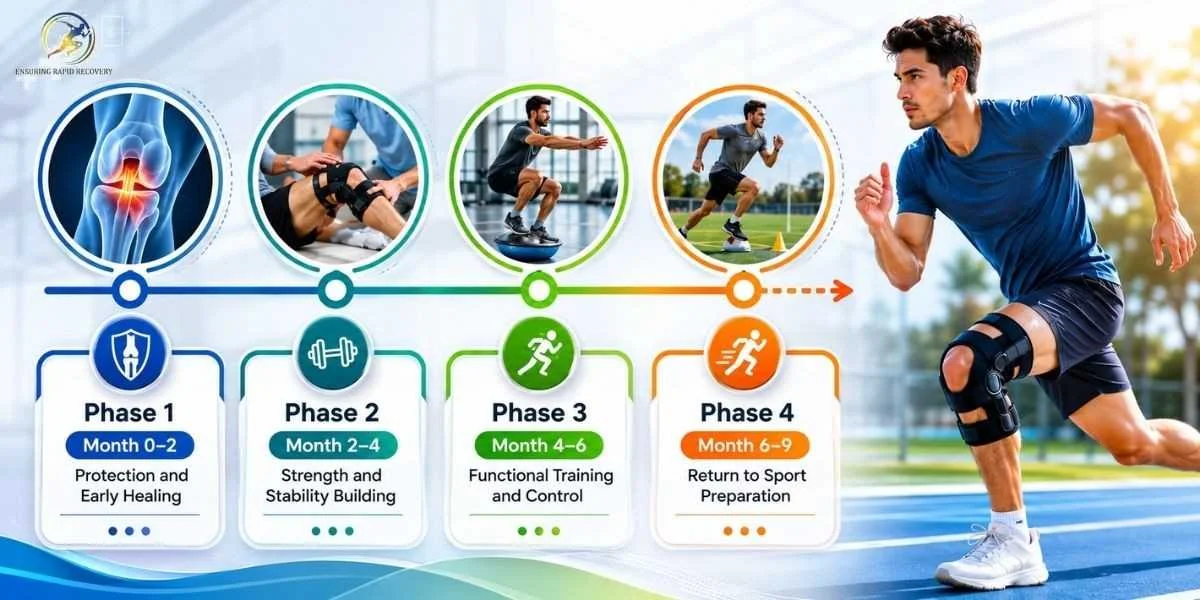
Let’s break down the 9-month journey in a practical, human way, with logic, science, and a bit of reality check humour (because your knee isn’t a Netflix series that finishes in one season).
Phase 1: Month 0–2 — Protection and Early Healing
In the first two months, the focus stays on the Graft Healing Process, pain control, and swelling reduction. The knee behaves like a sensitive new smartphone—you don’t drop it, bend it randomly, or test its limits too early.
Patients often visit specialists like Dr. Saksham Mittal or search for the top doctor for ACL surgery again for reassurance during this phase. That’s normal. Early recovery brings anxiety, especially fear of re-injury and reduced recovery motivation after injury.
Key goals include:
- Restoring basic knee motion
- Reducing swelling
- Activating quadriceps (prevent Muscle Atrophy Recovery)
- Beginning gentle Physiotherapy after ACL reconstruction
Clinics focusing on ACL rehabilitation stress early movement, but controlled load. The knee’s Biomechanics of the Knee system needs time to adapt after surgery.
At this stage, Dr. Saksham Mittal usually highlights one rule: Don’t rush what biology hasn’t approved yet.
Phase 2: Month 2–4 — Strength and Stability Building
Now the knee starts behaving less like a fragile gadget and more like a working joint again. This phase focuses on rebuilding strength and coordination through structured Rehabilitation Protocols.
Exercises target:
- Quadriceps and hamstring strengthening
- Early Neuromuscular Training
- Controlled weight-bearing activities
- Improving balance using Proprioception Training
Many patients feel better here and assume they are almost ready. That’s where mistakes happen. Feeling good does not mean the knee is ready for sport.
Dr. Saksham Mittal, known as a trusted Best orthopedic surgeon in Delhi, often reminds athletes that confidence should grow with function, not just pain reduction.
This phase also introduces the early Functional Movement Assessment to track movement quality, not just strength numbers.
Emotional side effects appear here too:
- Growing return to sport confidence
- Reduced fear of re-injury
- Better mental readiness for sport
But sports performance anxiety can still sneak in quietly, like a defender you didn’t see coming.
Phase 3: Month 4–6 — Functional Training and Control
Now the focus shifts to controlled performance. The knee starts handling more complex movements under supervision.
Key developments:
- Advanced ACL reconstruction recovery progression
- Sport-specific drills
- Jumping and landing mechanics
- Improved Neuromuscular Training
At this stage, athletes begin thinking, Can I return to play after ACL yet? The answer is still usually no, but you’re getting closer.
Dr. Saksham Mittal emphasizes precision over speed in this phase. Even top athletes under ACL rehabilitation programs follow strict progression rules.
We also introduce:
- Agility training
- Reaction drills
- Higher-load strengthening
The goal is not just movement, it’s control under pressure. This is where Return to Sport Criteria becomes more important than personal motivation alone.
Phase 4: Month 6–9 — Return to Sport Preparation
This is the most exciting phase, but also the most dangerous if rushed. Many athletes feel ready, but the knee still needs validation through tests and assessments.
Key Factors That Influence the ACL Return to Sport Timeline Decisions
- Strength symmetry
- Movement quality
- Psychological readiness
- Passing Functional Movement Assessment
This phase also focuses heavily on:
- High-intensity Sports injury rehabilitation
- Cutting and pivoting drills
- Full-speed agility training
Athletes often experience mixed emotions:
- Strong athlete comeback mindset
- Improved recovery motivation after injury
- But occasional psychological recovery after ACL surgery doubts
Dr. Saksham Mittal, a leading name in ACL and robotic joint care, ensures patients meet full criteria before clearance. His expertise in advanced orthopedic care and joint restoration makes him a reliable guide for long-term recovery outcomes.
This is also where graft strength and neuromuscular control must align. If either fails, reinjury risk rises.
Final Clearance: Safe Return to Sport
Final clearance depends on objective testing, not emotion. Doctors assess:
- Strength balance
- Stability
- Movement quality
- Confidence under load
Only when all Return to Sport Criteria are met, athletes return safely.
Dr. Saksham Mittal often advises patients that returning too early is like entering a match without a proper warm-up; it rarely ends well.
This phase reflects full recovery of:
- Proprioception Training
- Muscle balance
- Sport-specific readiness
At this stage, the athlete finally transitions from rehabilitation to performance.
Final Thoughts on ACL Return to Sport Timeline and Recovery Discipline
The ACL return to sport timeline is not just about waiting nine months. It is about structured progression, discipline, and trust in the process.
With guidance from experts like Dr. Saksham Mittal, recognized as a leading orthopedic surgeon in Delhi and a specialist in joint reconstruction, patients can navigate recovery safely and confidently.
Whether someone is searching for the best doctor for ACL surgery or trying to understand their rehab journey, one truth remains constant: consistency beats speed.
Proper ACL rehabilitation, guided training, and emotional resilience turn injury into a comeback story, not a setback.
And yes, your knee will eventually thank you. It just doesn’t send WhatsApp messages.
If you are ready to begin your recovery journey or need expert guidance for ACL treatment and rehabilitation, contact us today to book a consultation with Dr. Saksham Mittal and take the first step toward a safe and confident return to sport.
[…] Also Read: The 9-Month ACL Recovery Timeline for Safe Return to Sport […]