
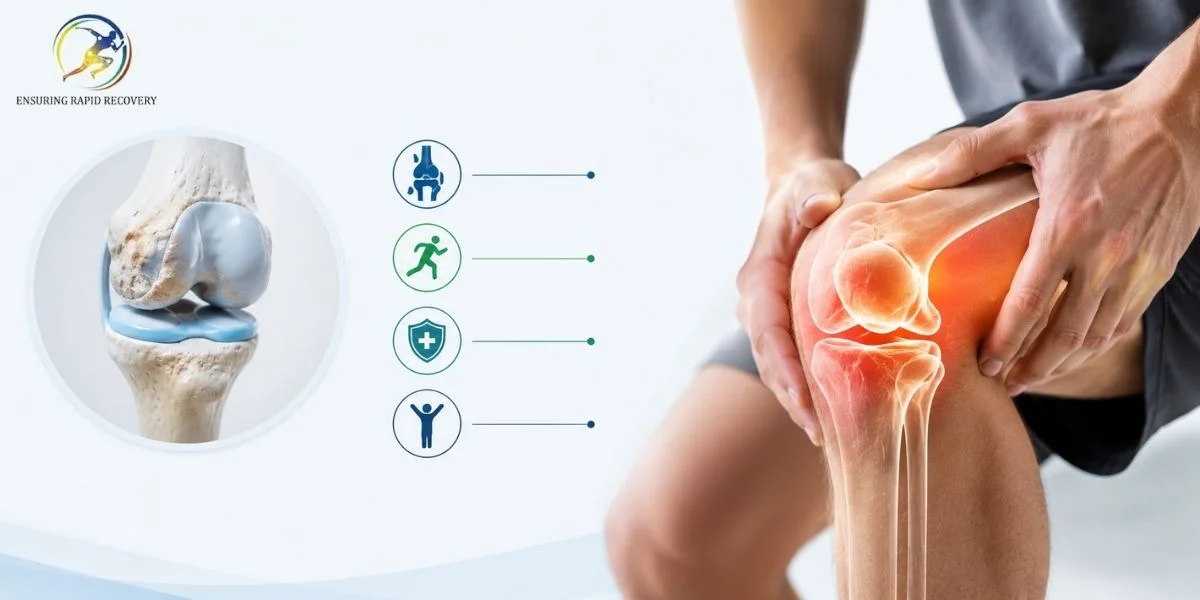
Before we dive in, let’s set the context clearly: this article explains What Is Knee Cartilage Damage, how it affects daily life, what causes it, and how recovery works. It also connects modern treatment options like knee replacement in Delhi with real-world orthopedic care led by Dr. Saksham Mittal, a trusted name in advanced knee treatment.
Understanding Knee Cartilage Damage (What Is Knee Cartilage Damage)
Knee cartilage damage happens when the smooth, rubber-like tissue inside the knee joint starts wearing out, tearing, or breaking down. This tissue, called articular cartilage, acts like a cushion between bones in a synovial joint.
When it gets damaged, bones begin to rub against each other. That’s when people feel knee pain while walking, swelling in the knee joint, stiffness affecting daily life, and chronic joint discomfort.
Patients often describe it as:
- My knee feels like it has sand inside it.
- Every stair feels like a negotiation.
And honestly, the knee rarely agrees.
Conditions like Osteoarthritis and Chondromalacia Patellae often contribute to cartilage breakdown.
Why Knee Cartilage Damage Happens
Before we break this section down, this part explains the real-world causes behind cartilage injury and wear.
Knee cartilage doesn’t suddenly give up. It wears down over time or gets injured.
Common causes include:
- Knee cartilage injury from sports or accidents
- Meniscus and cartilage injury involving the Meniscus
- Repetitive strain due to poor knee biomechanics
- Age-related joint degeneration
In medical terms, doctors also call this cartilage loss in the knee joint or chondral defect in the knee when a specific area gets damaged.
Dr. Saksham Mittal often explains to patients that cartilage behaves like a phone screen protector; once cracked, it doesn’t heal easily on its own. (Yes, even knees hate bad luck.)
How Cartilage Wears Out Over Time
Before this heading, here’s the logic: we are focusing on gradual degeneration rather than sudden injury.
Cartilage wear happens slowly through knee joint degeneration. Over time, chondrocytes (the cells responsible for maintaining cartilage) lose efficiency. This reduces natural repair ability.
As a result:
- Cushioning decreases
- Friction increases
- Pain increases during movement
This is why patients experience reduced mobility concerns and difficulty walking due to knee pain.
In such cases, early consultation with the Best orthopedic surgeon in Delhi, like Dr. Saksham Mittal, helps prevent further damage.
Also Read: The 9-Month ACL Recovery Timeline for Safe Return to Sport
Symptoms You Should Not Ignore
Before we explain this section, symptoms are the body’s warning system; ignoring them is like ignoring a smoke alarm while cooking.
Key symptoms include:
- Knee pain while walking or climbing stairs
- Swelling in the knee joint
- Knee stiffness causes difficulty in movement
- Clicking or grinding sensation
- Morning stiffness affects daily life
Many patients also report knee pain frustration, especially when simple activities like walking feel like gym workouts.
Dr. Saksham Mittal often highlights that early diagnosis can delay or even avoid advanced surgical steps like knee replacement.
Emotional Impact of Knee Cartilage Damage
Before this section, let’s not ignore the emotional side, because knees affect more than movement.
Knee cartilage damage doesn’t just hurt physically. It creates:
- Anxiety about knee surgery
- Fear of worsening knee condition
- Emotional stress from injury
- Recovery uncertainty
- Worry about long-term damage
Patients often feel stuck in a loop of chronic joint discomfort and reduced independence.
Dr. Saksham Mittal understands this psychological burden and guides patients with clarity instead of fear-based advice. That’s what builds trust in treatment decisions.
Diagnosis and Clinical Evaluation
Before this heading: diagnosis helps doctors understand the severity and type of cartilage damage.
Doctors evaluate:
- Physical knee movement
- Pain levels
- Imaging tests like MRI
They assess conditions like:
- Cartilage loss in the knee joint
- Chondral defect in the knee
- Meniscus involvement
Advanced orthopedic specialists, including the Best knee replacement surgeon in Delhi, use knee biomechanics understanding to identify whether the condition can heal conservatively or needs surgical correction.
Dr. Saksham Mittal uses structured evaluation methods to ensure patients receive the most appropriate treatment path.
Treatment Options for Knee Cartilage Damage
Before this section, treatment depends on severity, age, and lifestyle.
Treatment options include:
Non-Surgical Methods
- Physiotherapy for strengthening the surrounding muscles
- Lifestyle modifications
- Pain management strategies
Surgical Methods
- Cartilage repair techniques
- Microfracture procedures
- Advanced knee replacement, in severe cases
Modern cartilage repair techniques focus on stimulating cartilage regeneration, though results vary depending on the extent.
Dr. Saksham Mittal carefully evaluates whether surgery is truly necessary, avoiding unnecessary procedures wherever possible.
Recovery and What Patients Should Expect
Before this section, recovery is not just physical healing, it’s a process of rebuilding confidence in movement.
Recovery depends on:
- Severity of cartilage damage
- Type of treatment used
- Patient lifestyle
Patients often deal with:
- Reduced mobility concerns initially
- Gradual improvement in movement
- Better pain control over time
However, recovery uncertainty is common, especially when patients search online and find conflicting advice.
Dr. Saksham Mittal emphasizes structured rehab plans to reduce confusion and improve outcomes.
Can Knee Cartilage Heal Completely?
Before this heading: this is one of the most common patient questions.
Cartilage has limited self-healing ability because it lacks a direct blood supply. That’s why Cartilage Regeneration remains a complex medical challenge.
However:
- Early-stage damage may stabilize
- Treatment can reduce pain
- Surgery can restore function in severe cases
The key is early intervention before joint degeneration progresses.
When to Consult a Knee Specialist for Cartilage Damage
Before this section: timing matters more than people think.
You should consult a specialist if:
- Pain lasts more than a few weeks
- Swelling keeps returning
- Walking becomes difficult
- Stiffness increases daily
At this stage, consulting with Dr. Saksham Mittal, who is known as the best orthopedic surgeon in Delhi, can prevent long-term complications.
In advanced cases, he may discuss with the knee replacement surgeon with complete transparency.
Final Thoughts on Knee Cartilage Damage and Recovery
Knee cartilage damage is not just a medical condition; it affects mobility, confidence, and daily life. Understanding What Is Knee Cartilage Damage helps patients take early action instead of waiting for pain to escalate.
With expert care from Dr. Saksham Mittal, patients gain clarity, structured treatment, and realistic recovery expectations without unnecessary fear.
The key message is simple: early diagnosis and the right guidance can significantly slow down progression and improve long-term knee health. Ignoring symptoms like knee pain, stiffness, or swelling often leads to advanced joint degeneration, while timely intervention opens the door to better recovery outcomes.
If you are experiencing knee pain or suspect cartilage damage, don’t delay your care. Contact us today to book a consultation with Dr. Saksham Mittal and get expert evaluation, personalized treatment, and a clear path toward pain-free movement and better mobility.