
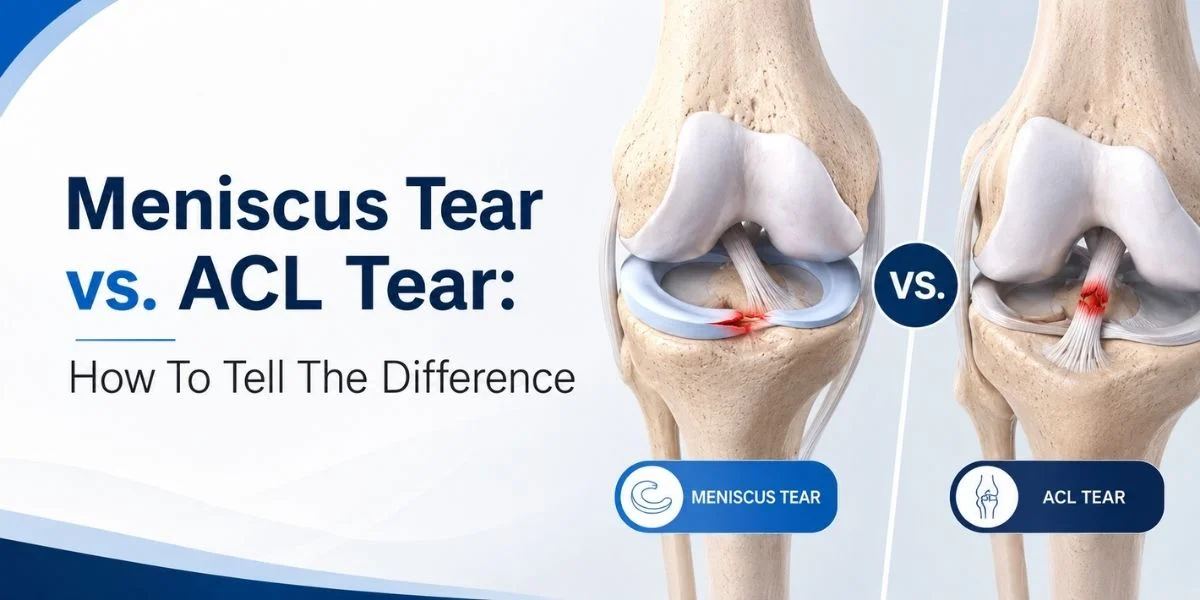
Knee injuries rarely send a polite warning before they strike. One awkward landing, one sudden twist, or one aggressive pivot during sports can leave you dealing with severe pain, swelling, and a growing fear of long-term damage. Many people immediately search for the difference between a meniscus tear and an ACL tear because both injuries affect the knee joint and share similar symptoms. However, they are not the same injury, and understanding the difference can help you seek the right treatment faster.
If you experience persistent knee pain and discomfort after a sports injury, consulting the Best orthopedic surgeon in Delhi becomes important for accurate diagnosis and recovery planning. Many patients also search for the best doctor for ACL surgery when instability and movement problems continue after injury.
In this guide, we will explain the key difference between a meniscus tear and an ACL tear using medically trusted information from organizations like the American Academy of Orthopedic Surgeons, Mayo Clinic, and National Health Service (NHS). We will also discuss symptoms, causes, diagnosis methods, recovery options, and when surgery may become necessary.
Understanding the Knee Structure
The Human Anatomy of the knee can seem complicated until injury suddenly makes it very personal.
Your Knee Joint contains several important structures that work together for movement and stability:
- The Anterior Cruciate Ligament stabilizes the knee during rotation and sudden movement.
- The Medial Meniscus and Lateral Meniscus act like shock absorbers.
- Other Knee Ligaments support balance and motion.
- The knee also contains protective Cartilage that cushions the bones.
An ACL tear involves ligament damage, while a meniscus tear involves damaged cartilage inside the knee. That difference changes the symptoms, treatment plan, and recovery timeline.
Also Read: What is Total Knee Replacement? A Clear Guide for Patients and Families
What Is an ACL Tear?
An ACL tear occurs when the anterior cruciate ligament stretches or tears due to sudden force. This injury often happens during sports that involve jumping, twisting, cutting, or rapid direction changes.
According to Mayo Clinic, common ACL injury symptoms include:
- A loud popping sound in a knee injury
- Sudden knee pain during sports
- Rapid swelling after a knee injury
- Instability in the knee joint
- Difficulty walking after a knee injury
- Reduced range of motion
- Feeling unstable while walking
Sports like football, basketball, badminton, and cricket frequently lead to ACL injuries because they involve aggressive knee rotation, which can cause injury.
Many patients describe the moment of the injury clearly. They hear a “pop,” collapse instantly, and struggle to continue activity. Others feel anxiety about surgery almost immediately after learning about ligament damage.
What Is a Meniscus Tear?
A meniscus tear involves damage to the knee cartilage that cushions the bones inside the joint. The tear often develops after twisting the knee while bearing weight.
Unlike ACL injuries, some people continue walking after a meniscus injury. However, symptoms often worsen within the next 24 to 48 hours.
Common meniscus injury symptoms include:
- Knee locking sensation
- Knee pain while twisting the leg
- Swelling and inflammation in the knee
- Knee joint stiffness and swelling
- Pain during bending or squatting
- Catching sensation inside the knee
- Difficulty climbing stairs
- Discomfort while bending the knee
According to the American Academy of Orthopedic Surgeons, meniscus tears commonly happen during pivoting sports movements or deep twisting motions.
The tricky part? Some patients think they only “slightly twisted” the knee until they attempt to sit cross-legged later and suddenly realize their knee disagrees with every life decision they made that day.
Meniscus Tear Vs ACL Tear: Main Differences
1. The Sound at the Time of Injury
An ACL tear often creates a noticeable popping sound in knee injury cases. Many patients hear or feel the pop immediately.
A meniscus tear may also produce a pop, but it usually feels smaller or less dramatic.
2. Swelling Pattern
ACL injuries typically cause rapid swelling after a knee injury within a few hours.
Meniscus tears may swell gradually over 24 to 48 hours.
3. Knee Stability
Instability in the knee joint strongly suggests ACL damage. Patients often say the knee “gives way” while walking.
Meniscus tears usually create pain and locking rather than major instability.
4. Knee Locking Sensation
A knee locking sensation is more common with a cartilage tear in knee injuries involving the meniscus.
Some patients physically cannot fully straighten the leg because torn cartilage blocks movement.
5. Difficulty Walking
Difficulty walking after a knee injury occurs in both conditions, but the cause differs.
- ACL tears create weakness and instability.
- Meniscus tears create pain, stiffness, and locking.
Common Causes of These Knee Injuries
ACL Tear Causes
ACL injuries usually happen during:
- Sudden stopping
- Pivoting
- Jumping and awkward landing
- Direct sports impact
- Rapid direction changes
These injuries appear frequently in football, basketball, volleyball, and skiing athletes.
Meniscus Tear Causes
Meniscus injuries commonly result from:
- Deep knee twisting
- Squatting with a heavy weight
- Sudden knee rotation
- Sports collisions
- Degenerative cartilage wear in older adults
Even standing up awkwardly from a chair can sometimes trigger a meniscus tear in aging knees.
How Doctors Diagnose ACL and Meniscus Tears
Proper sports knee injury diagnosis matters because symptoms overlap.
An orthopedic specialist may use:
Physical Examination
Doctors check:
- Knee stability
- Swelling
- Pain location
- Joint movement
- Locking symptoms
MRI Scan
Magnetic Resonance Imaging (MRI) remains one of the most accurate tools for ligament injury diagnosis and cartilage evaluation.
MRI scans help identify:
- Partial ACL tears
- Complete ligament rupture
- Meniscus damage
- Bone bruising
- Associated injuries
X-Ray Imaging
X-ray Imaging does not show ligaments clearly, but it helps rule out fractures or arthritis.
Can You Walk With an ACL or Meniscus Tear?
Yes, some people can still walk after either injury. That fact often confuses patients.
Several real-world patient experiences show that people sometimes continue walking despite significant ACL damage. However, walking does not confirm a minor injury. Many patients later develop worsening instability, recurring pain, or reduced physical activity because they delayed treatment.
Meniscus tears also vary widely. Small tears may cause only mild discomfort initially, while severe tears can create immediate locking and stiffness.
Treatment Options for ACL Tears
Treatment depends on:
- Age
- Activity level
- Sports participation
- Severity of instability
- Associated injuries
Non-Surgical Treatment
Some patients improve with:
- Rest
- Ice
- Bracing
- Physiotherapy
- Muscle strengthening
However, active individuals with persistent instability often require surgery.
ACL Reconstruction Surgery
ACL Reconstruction Surgery rebuilds the damaged ligament using graft tissue.
Patients searching for the best doctor for ACL surgery in Delhi often want advanced arthroscopic treatment with faster rehabilitation planning.
Minimally invasive Knee Arthroscopy techniques now reduce recovery discomfort significantly.
Treatment Options for Meniscus Tears
Treatment depends on tear size and location.
Conservative Treatment
Doctors may recommend:
- Rest
- Anti-inflammatory medication
- Physiotherapy
- Activity modification
Meniscus Repair Surgery
Large or unstable tears sometimes require Meniscus Repair Surgery.
Many surgeons perform this procedure using Arthroscopy to reduce recovery time and preserve knee function.
Patients often worry about a long recovery time, but early treatment improves long-term outcomes.
Recovery Time: ACL Tear Vs Meniscus Tear
Recovery differs greatly between the two injuries.
| Injury | Recovery Time |
| Minor Meniscus Tear | 4–8 weeks |
| Meniscus Surgery Recovery | 3–6 months |
| ACL Rehabilitation | 6–12 months |
| ACL Reconstruction Surgery Recovery | 9–12 months |
Recovery also depends on rehabilitation consistency and muscle strength rebuilding.
When Should You See an Orthopedic Specialist?
Seek medical help immediately if you experience:
- Sudden sharp pain in the knee
- Severe swelling after knee injury
- Feeling unstable while walking
- Inability to fully bend the knee
- Knee locking sensation
- Persistent knee pain and discomfort
- Fear of worsening knee injury
- Reduced mobility after sports trauma
If symptoms continue, consulting Dr. Saksham Mittal through his Google Business Profile can help you explore diagnosis and treatment options with an experienced orthopedic specialist. Patients searching for the Best orthopedic surgeon in Delhi often prioritize expertise in sports injury management and arthroscopic procedures.
When to Act on Knee Pain Before It Gets Worse
The difference between a meniscus tear and an ACL tear often comes down to stability versus locking.
ACL injuries usually create immediate instability, rapid swelling, and a dramatic popping sensation. Meniscus tears more commonly produce stiffness, locking, twisting pain, and restricted movement.
Still, these injuries frequently occur together. That is why proper ligament injury diagnosis using MRI and orthopedic evaluation matters so much.
Ignoring symptoms may increase stress due to recurring knee pain, limit physical activity, and reduce quality of life over time. Early diagnosis and rehabilitation improve recovery chances and help protect long-term joint stability.
If you notice persistent knee ligament injury symptoms after sports or sudden twisting movements, do not rely on guesswork. A professional evaluation can help you return to normal movement safely and confidently.
For proper diagnosis and treatment, contact Dr. Saksham Mittal today and schedule your consultation to get expert care and a personalized recovery plan.
[…] Also Read: Meniscus Tear vs. ACL Tear: How To Tell The Difference […]