
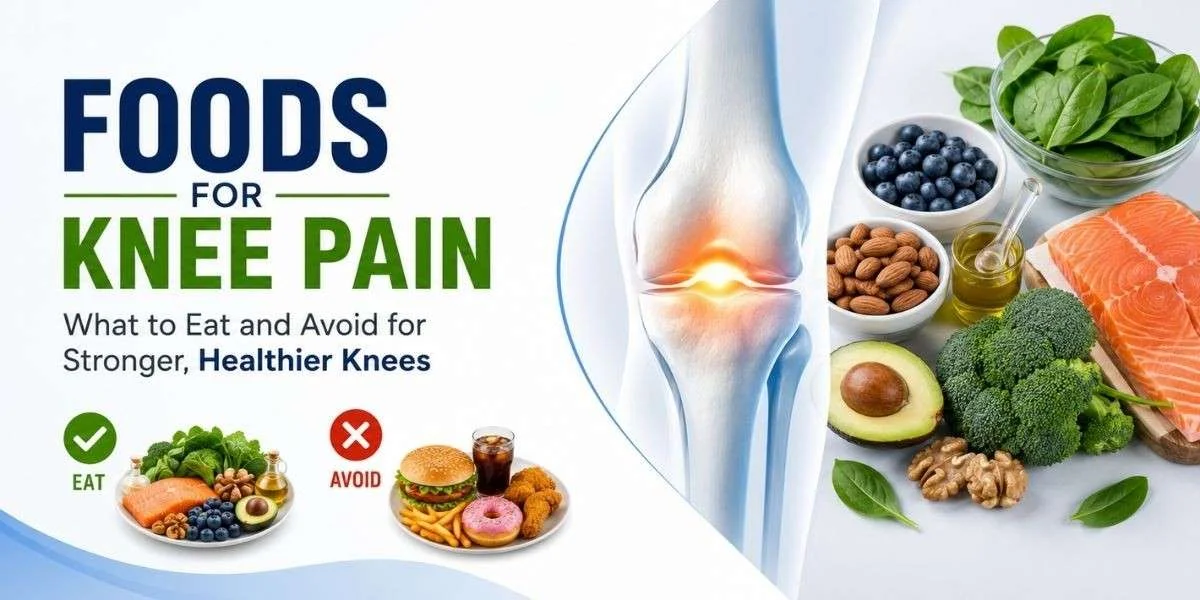
Your knees carry you through every single day, up the stairs, around the office, and occasionally into a very ambitious yoga pose you saw on Instagram. So it makes sense that when they start aching, you want answers fast. Here is one that often gets overlooked: what is on your plate matters almost as much as what happens at the gym. Foods for knee pain are not a magic cure, but the right diet can genuinely reduce inflammation, protect cartilage, and keep your joints working smoothly for longer. And if the pain has already settled in and stuck around, it is worth talking to the Best knee replacement surgeon in Dwarka before it gets worse, rather than after.
Why Food Actually Affects Your Knee Joints
Before jumping into grocery lists, it helps to understand why nutrition matters here at all. Inflammation is not always the villain. It is actually an essential part of your body’s natural defense system, protecting and healing tissue after an injury. The trouble starts when that inflammation becomes chronic, sitting in the joints long after it is needed and quietly wearing them down.
Knee arthritis results partly from inflammation and oxidative stress in the joint, and while structural changes do happen to bone and cartilage, much of the pain and swelling people feel comes from elevated inflammatory markers rather than the structural damage alone. That is genuinely good news, because inflammatory markers respond to diet. An anti-inflammatory diet works by lowering the body’s inflammation levels, which are often the root cause of pain in conditions like knee arthritis.
There is also a simpler, more mechanical reason food matters: body weight. Studies have found that for every pound of weight lost, the load on the knee joint drops by four pounds. That is not a typo. Four pounds of relief for every one pound you shed. Suddenly, that extra slice of cake at 11 PM feels like a much bigger decision.
Also Read: Knee Replacement for Patients Over 70 – Is Age Really a Barrier?
Best Foods for Knee Pain Relief and Joint Support
Now for the part you actually came here for. These are the foods with real research behind them, not wellness-blog guesswork.
Fatty Fish and Omega-3 Fatty Acids
Fatty fish has consistently been one of the leading recommendations in every study on the treatment of arthritis. Salmon tuna sardines, herring anchovies scallops, and other such species are all excellent sources of anti-inflammatory omega-3 fatty acids. And, research has revealed that individuals who were the highest consumers of omega-3s showed reduced levels of C-reactive protein and interleukin-6, the two inflammatory proteins. With the intake of omega-3s in fish, the immune system’s ability to regulate inflammation is enhanced when these nutrients interfere with the functions of some cells thereby it is a protective mechanism to prevent inflammatory damage to the joints. In general, most doctors and researchers recommend two or more servings of fatty fish per week to ensure good knee joint health.
Turmeric and Ginger
These two kitchen staples deserve more credit than they get. Turmeric contains curcumin, a compound that can reduce joint pain and swelling by blocking inflammatory cytokines and enzymes, and clinical trials have shown long-term improvement in chronic inflammatory joint disease with its use. Ginger holds its own, too. Ginger extract has been shown to decrease joint pain in people with osteoarthritis and rheumatoid arthritis, with anti-inflammatory properties similar to ibuprofen. Add either to a curry, a smoothie, or your morning tea, and you are quietly doing your joints a favour.
Leafy Greens and Berries for Joint Health
Leafy greens such as spinach, kale and Swiss chard, plus cruciferous vegetables like broccoli and Brussels sprouts, are rich in phytonutrients and fibre, which are beneficial for reducing inflammation and promoting overall health. Clearly, berries, too, should not be left out. Fruits such as red strawberries, blueberries, and raspberries contain high levels of vitamin C and antioxidants, respectively, apart from other compounds, quercetin and rutin, found in berries, which are natural plant compounds that have anti-inflammatory and analgesic effects. So, a smoothie with spinach and berries for breakfast essentially is a kind of support for the joints.
Nuts, Seeds, and Olive Oil Benefits
Almonds, walnuts, chia seeds, flax seeds, and pine nuts provide anti-inflammatory effects that help reduce pain and strengthen joints, and an ounce or two stirred into salads or rice bowls goes a long way. Olive oil deserves a special mention too. A compound in olive oil called oleocanthal has anti-inflammatory effects comparable to ibuprofen, which is a fairly remarkable claim for something sitting quietly in your kitchen cabinet.
Whole Grains for Cartilage and Bone Strength
Whole grains made from the entire grain kernel, such as whole wheat flour, oatmeal, brown rice, and quinoa, provide fibre that has been shown to lower blood levels of CRP, an inflammatory marker. Beyond fighting inflammation, whole grains and legumes like beans and lentils are high in fibre, which helps lower CRP levels associated with joint inflammation, supporting both bone strength and a healthy weight over time.
Vitamin C and Vitamin D for Joints and Bones
Two vitamins are worth calling out specifically. Vitamin C is a key element for joint health because it helps build collagen and connective tissue, and citrus fruits, red peppers, strawberries, broccoli, cabbage, and kale are all good sources. Vitamin D matters just as much for bone strength. Research studies have linked low blood levels of vitamin D with an increased risk of both osteoarthritis and rheumatoid arthritis, and good sources include sunlight, egg yolk, salmon, and fortified foods.
Foods to Avoid When You Have Knee Pain
Just as some foods calm inflammation, others quietly stoke it. If you are wondering which foods to avoid when you have knee pain, this list is a solid starting point.
Added sugar tops the list. Research published in the American Journal of Clinical Nutrition found that foods high in sugar can cause inflammation in the body by triggering the release of inflammatory messengers called cytokines. Hidden sugar hides in places you would not expect, including flavoured coffees and instant oatmeal.
Saturated fats are next. Studies have proven that saturated fats trigger inflammation in fat cells, which increases the inflammation associated with arthritis, and common sources include red meat, pizza, and full-fat dairy.
Refined carbohydrates round out the trio. Refined carbs like white bread and white rice have been linked to higher levels of inflammatory markers in the blood, largely because most of their natural fibre has been stripped away during processing.
Omega-6 heavy cooking oils are worth watching too. While omega-3 may help people with arthritis, omega-6 fatty acids, found in oils like corn and sunflower oil, might actually boost the body’s production of inflammatory chemicals.
And finally, alcohol. The Arthritis Foundation recommends limiting alcohol intake, since it may interact with pain-relief medications. Nothing wrong with the occasional drink, but if your knee is already flaring up, this is not the week to test that theory.
Diet Alone Is Not Always Enough
Here is the honest part of this article. Food can meaningfully reduce chronic joint pain and support cartilage repair, but it cannot rebuild cartilage that has already worn away, and it cannot replace medical treatment when knee damage becomes advanced. If your knee pain persists despite dietary changes, or if mobility keeps declining, that is the signal to get a professional opinion rather than adding more turmeric to your tea.
This is exactly the stage where Dr. Saksham Mittal, a leading joint specialist in Paschim Vihar with over 11 years of experience in joint restoration, becomes genuinely valuable. Specializing in robotic knee replacement, ACL reconstruction, and minimally invasive knee surgeries, Dr. Saksham Mittal combines modern surgical precision with a realistic, honest approach to when surgery is actually necessary versus when lifestyle changes will do the job. For patients across Delhi exploring Knee Replacement in Delhi, having a surgeon who prioritizes conservative options first, and surgery only when needed, makes a real difference in long-term outcomes.
Building Better Habits for Long-Term Knee Health
Enhancing your diet is about consistently making good decisions, and not about being perfect. Minor adjustments – such as picking whole grains instead of refined cereals, including more nutrient-dense foods, and cutting back on packaged snacks – are simple measures that can greatly enhance your joint health eventually.
When these habits are combined with regular movement, weight control, and routine check-ups, your knees get a much better foundation to remain active and pain-free. Of course, when your knees are sore for a long time, get progressively worse, or interfere with your normal way of life, you should not just let it go. Meet Dr. Saksham Mittal to obtain an expert opinion and customized treatment advice. With a proper strategy and timely execution, you will be able to grasp your medical condition more deeply, consider potential treatment alternatives, and finally regain control of your mobility while enjoying an improved life quality.
Contact us today to book a free health consultation and receive all the physical and professional support your knees deserve.