
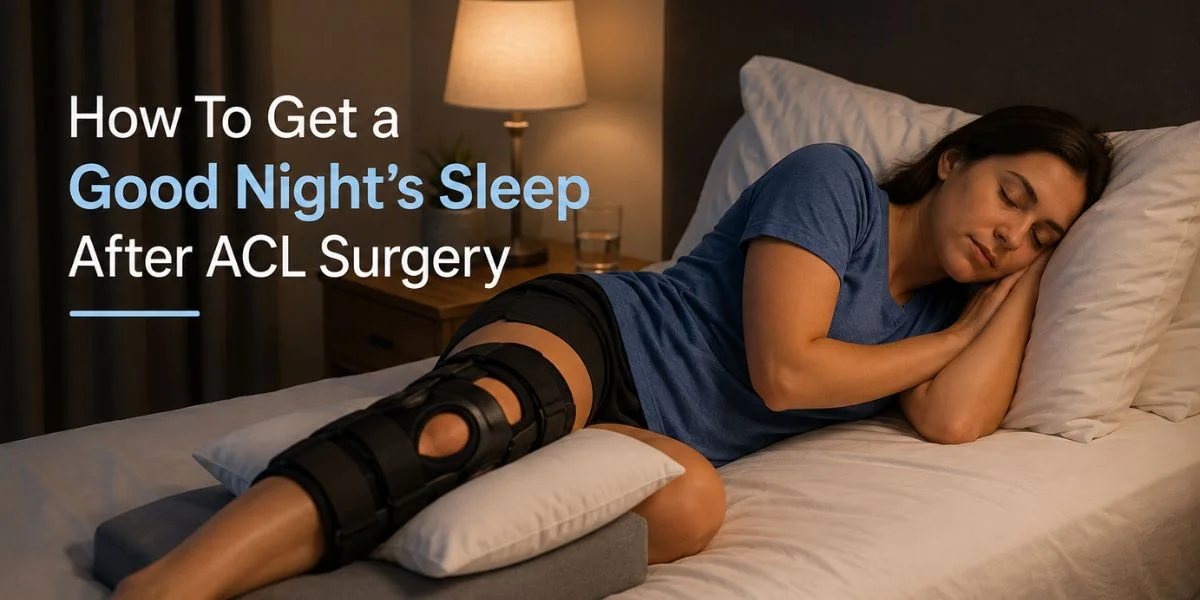
Getting comfortable at night can become surprisingly difficult after ACL surgery. Your knee may feel swollen, stiff, or simply unfamiliar, and finding a position that does not make you think about your knee every five minutes can feel like a small victory. If you are looking for the best doctor for ACL surgery in Delhi, a proper consultation can help you understand your individual surgical and rehabilitation plan before recovery begins.
After ACL reconstruction, sleep becomes part of your recovery routine. Good sleep supports physical and emotional recovery, while pain and disrupted sleep can make rehabilitation feel harder. The American Academy of Orthopaedic Surgeons notes that sleep can be disrupted for weeks or months after surgery and remains important for recovery.
So, how to sleep after ACL surgery? The answer depends on your procedure, brace instructions, swelling, comfort, and your surgeon’s rehabilitation protocol.
Why Is Sleeping Difficult After ACL Surgery?
The early stage of ACL surgery recovery can bring knee swelling, pain, stiffness, and limited movement. Your surgeon may also ask you to use a knee brace or crutches, which can make your usual sleeping position feel impossible.
After ACL reconstruction, the knee needs protection while the ACL graft and surrounding tissues recover. Your rehabilitation team also works on restoring range of motion, controlling swelling, and gradually rebuilding strength. Mass General notes that rehabilitation begins with restoring knee motion and later progresses toward strengthening and functional activities.
That means your nighttime goal is simple: protect the knee, control discomfort, and get enough rest without fighting your pillow all night.
What Are the Best Positions to Sleep After ACL Surgery?
There is no single sleeping position that works for every patient. Your surgeon’s instructions should come first, especially during the initial weeks.
Sleeping on Your Back
For many patients, lying on the back with the operated leg supported can provide a practical protected knee position.
You can place appropriate support under the lower leg to help keep the knee comfortable and reduce pressure. However, avoid creating a position that forces the knee into an uncomfortable bend unless your rehabilitation team specifically recommends it.
Your surgeon or physical therapist may give you specific instructions about knee extension and positioning. Some ACL protocols emphasize maintaining full knee extension early in recovery.
Sleeping on Your Side
Many patients eventually ask, Can I sleep on my side after ACL surgery?
The answer is: possibly, but timing matters.
Side sleeping can put pressure on the operated knee or cause the leg to rotate into an awkward position. If your surgeon has not cleared side sleeping, do not force it simply because your back is getting tired.
Once your medical team allows side sleeping, a pillow between the legs can provide gentle support and help maintain more comfortable alignment.
If you are specifically wondering when can I sleep on my side after ACL surgery, ask your surgeon rather than following a fixed internet timeline. Your procedure may have included additional work, such as meniscus repair, which can change rehabilitation restrictions.
When Can I Sleep Without a Brace After ACL Surgery?
This is another question without one universal answer.
When can I sleep without a brace after ACL surgery? It depends on your surgeon’s protocol, the type of reconstruction, knee stability, muscle control, and whether you had any additional procedures.
Hospital for Special Surgery advises patients to wear the brace at night according to their physician’s orders. Its patient guidance also emphasizes that brace use can change as recovery progresses.
Some rehabilitation protocols use a brace locked straight overnight during the early postoperative period.
Therefore, don’t decide to remove your brace at night simply because it feels uncomfortable. Comfort matters, but protecting the healing knee matters more.
Dr. Saksham Mittal also emphasizes individualized orthopedic care and offers ACL reconstruction and arthroscopic procedures as part of his orthopedic practice.
Also Read: Meniscus Tear vs. ACL Tear: How To Tell The Difference
Simple Tips for Better Sleep During ACL Recovery
Once your surgeon has provided your positioning and brace instructions, a few practical habits can make nighttime recovery easier.
Elevate the Leg When Appropriate
Elevation can help with postoperative swelling and discomfort. Use a comfortable setup that supports the leg without forcing the knee into an unwanted position.
If elevation increases pain, numbness, tingling, or discomfort, change the position and speak with your medical team.
Keep Your Knee Supported
A suitable pillow or support can help maintain proper knee alignment and reduce unnecessary movement.
Avoid placing random cushions everywhere and hoping for the best. Your knee does not need a pillow fortress; it needs controlled, comfortable support.
Follow Your Pain-Control Plan
Take prescribed medication exactly as directed by your healthcare professional. Do not increase doses or combine medicines without medical advice.
Cold therapy may also help manage pain and swelling when your surgeon recommends it. Mass General includes cold therapy among postoperative knee-care resources.
Prepare Your Sleeping Area
Make your bedroom easy to navigate. Keep water, medication, your phone, and other essentials within reach.
If you use crutches, remove objects that could cause trips. Mass General specifically recommends clearing pathways and removing potential hazards before surgery.
These small changes can support comfortable recovery and reduce unnecessary nighttime movement.
Also Read: The 9-Month ACL Recovery Timeline for Safe Return to Sport
Does Good Sleep Help ACL Recovery?
Sleep does not magically repair a reconstructed ACL overnight, but it forms an important part of overall recovery.
During ACL rehabilitation, your body needs to manage the effects of surgery while you gradually restore knee mobility, strength, coordination, and function. Poor sleep can make pain, fatigue, mood, and daily activity harder to manage.
The AAOS specifically highlights sleep as an important component of postoperative recovery and notes its connection with physical and emotional resilience.
That makes restful sleep a useful recovery goal, not a luxury.
Can an ACL Tear Heal on Its Own?
If you have not had surgery, you may wonder, Can an ACL tear heal on its own?
ACL injuries do not all require reconstruction. Mass General explains that some people, particularly less-active individuals, may achieve good knee function without surgery. However, treatment depends on factors such as activity level, instability, age, associated injuries, and personal goals.
A torn ACL should therefore receive a proper medical assessment rather than an assumption that it will simply heal with rest.
For people experiencing repeated instability, especially during pivoting activities, untreated ACL deficiency can also place additional stress on other knee structures.
If you are considering your treatment options, consulting the best doctor for ACL surgery in Delhi can help you understand whether rehabilitation alone or ACL reconstruction is appropriate for your situation.
What Should You Avoid at Night?
During early ACL reconstruction recovery, avoid movements that conflict with your rehabilitation protocol.
Be particularly careful about:
- Twisting the operated knee while getting into bed
- Removing a prescribed brace without approval
- Sleeping in a position that causes significant pain
- Placing excessive pressure on the surgical knee
- Ignoring increasing swelling or unusual symptoms
- Getting up quickly without your prescribed walking support
Your ACL rehabilitation plan should guide your nighttime movement as well as your daytime activity.
When Should You Contact Your Doctor?
Some discomfort after surgery can occur, but new or worsening symptoms deserve attention.
Contact your surgical team if you develop concerning symptoms such as worsening swelling, wound problems, significant changes in sensation or limb colour, or a major change in your ability to bear weight. Mass General lists these among postoperative warning signs that warrant medical attention.
Do not wait for your next routine appointment if something feels seriously wrong.
Get Personalised Guidance for Your ACL Recovery
Every ACL recovery is different. The right sleeping position, brace schedule, activity progression, and ACL physical therapy plan depend on your surgery and individual recovery.
Dr. Saksham Mittal is an orthopedic surgeon in Delhi with qualifications including MBBS and MS Orthopaedics and a clinical focus that includes ACL reconstruction, arthroscopy, and joint care. His practice provides orthopedic and physiotherapy services in Paschim Vihar.
Whether you are recovering from ACL surgery or evaluating another knee problem, professional guidance can help you make safer decisions. The clinic also provides Knee Replacement in Delhi among its orthopedic treatment services.
Key Takeaways for Better Sleep After ACL Surgery
The best sleeping positions after ACL surgery are those that protect your knee, follow your surgeon’s instructions, and help you rest comfortably.
Back sleeping may work well early in recovery, while side sleeping may become comfortable later once your medical team clears it. The same applies to sleeping without a brace; there is no universal timeline for everyone.
Focus on proper knee alignment, controlled swelling, gentle support, safe nighttime movement, and consistent rehabilitation. Most importantly, follow your surgeon’s advice rather than copying someone else’s recovery timeline.
Need personalised guidance after ACL surgery? Contact Dr. Saksham Mittal today for expert orthopedic evaluation and recovery guidance tailored to your knee.
[…] Also Read: How To Get a Good Night’s Sleep After ACL Surgery […]